Getting to Jūrmala by train
The easy way is the train. Regional trains leave Riga Central Station two or three times an hour in the direction of Tukums, Ķemeri or Sloka. The ride to Majori, the main resort stop, takes about 40 minutes and costs around 2.40 euro.
- Buy a ticket at the station counter or a machine, or tap a contactless card on board.
- Jūrmala has several stations along the coast, from east to west: Lielupe, Bulduri, Dzintari, Majori and Dubulti. Majori is the centre; Dzintari is best for the forest park.
- Driving in during summer needs a small daily entry fee for the town, so the train is simpler.
The beach
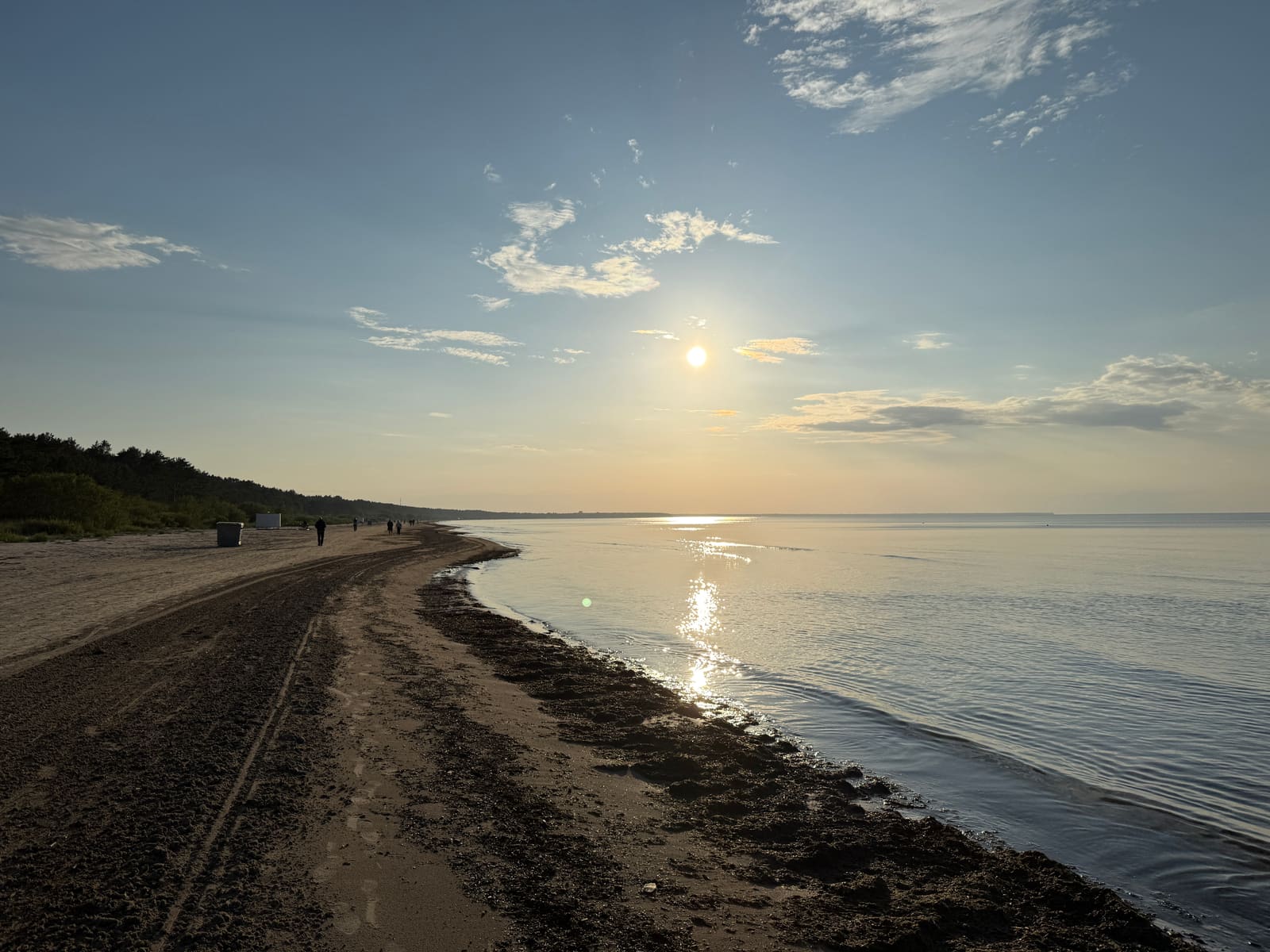
The beach is the reason to come. It runs for over 20 km, wide, flat and white, with a Blue Flag for clean water and gently shelving, shallow water that warms up in summer. The busiest and prettiest stretch is around Majori and Dzintari, with cafés, sun loungers and a family feel; walk a few minutes in either direction and you have the sand almost to yourself.
Even out of season it is worth it. A walk along the empty beach at sunset, with the pines behind you, is one of the nicest things you can do near Riga in any month.
Majori and Jomas iela
From Majori station it is a two-minute walk to Jomas iela, the resort's pedestrian high street. It runs about a kilometre, parallel to the beach, and is lined with restaurants, ice-cream stands, terraces and souvenir shops. It is the social heart of Jūrmala and a good place to eat before or after the beach.
The wooden villas and spa town
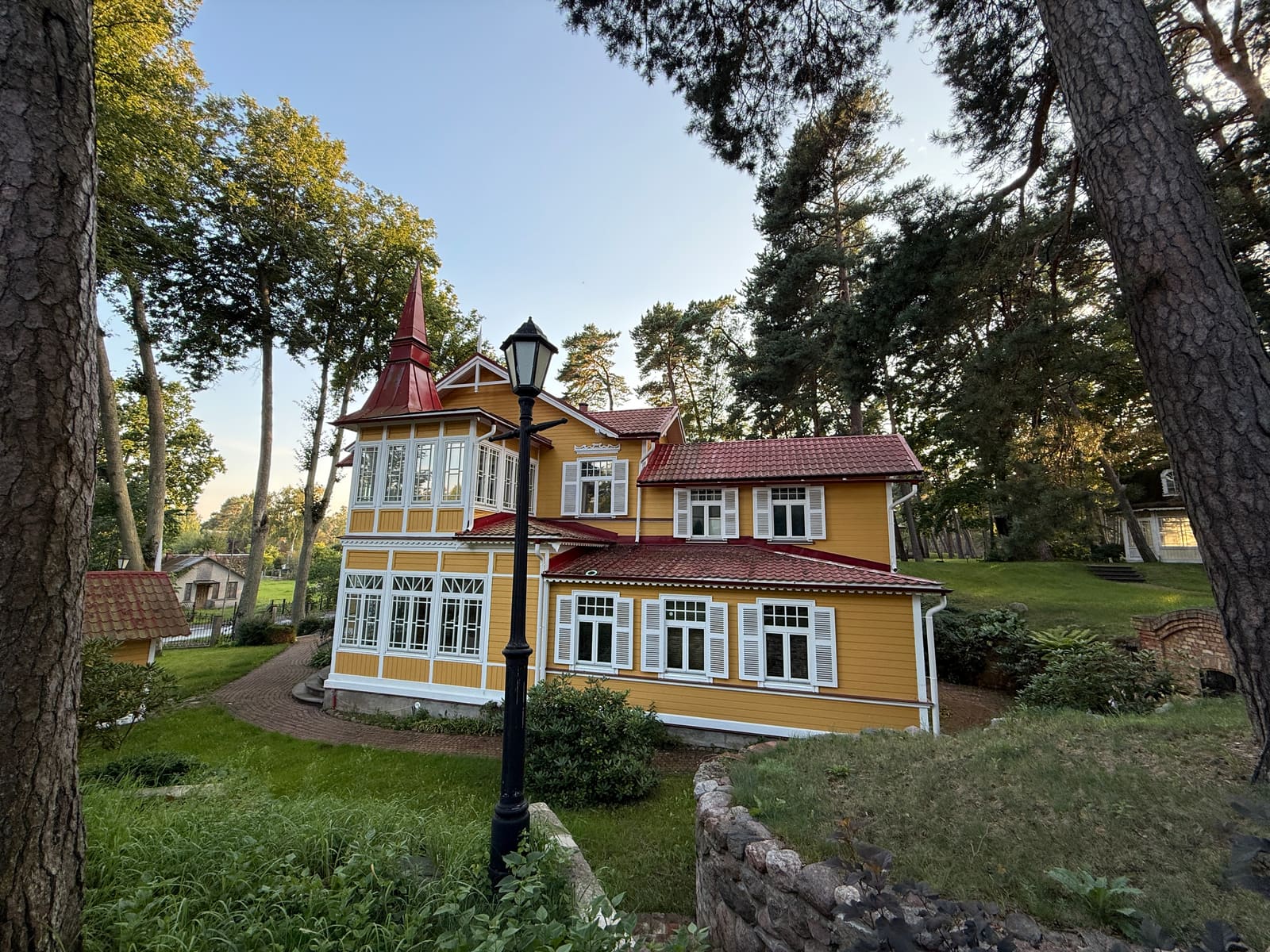
Jūrmala grew up as a spa resort in the 19th century, and the legacy is a remarkable collection of wooden summer villas, carved, painted and turreted, tucked among the pines. Streets like Jūras iela and the lanes around Dubulti and Bulduri are an open-air museum of Baltic dacha architecture. The elegant Dubulti station is a piece of Soviet-era modernism worth a look, and the Dzintari Concert Hall still hosts summer concerts.
Dzintari Forest Park
Behind the beach at Dzintari, Dzintari Forest Park is a free, well-kept pine park with boardwalk trails, a big adventure playground and, best of all, a 33.5-metre observation tower with a lift and a slide, and a view over the treetops to the sea. It is ideal with children or as a leg-stretch between the beach and the town.
Ķemeri National Park and the bog boardwalk
A little further west, Ķemeri National Park is a highlight in its own right. The Great Ķemeri Bog boardwalk loops for a few kilometres over a raised bog of pools, pines and mirror-still water, otherworldly at sunrise and popular with birdwatchers. There are also old sulphur springs from the town's spa days. Take the train to Ķemeri station and walk or cycle from there.
When to go and practical tips
Summer (June to August) is the season for swimming and the liveliest time on Jomas iela, but Jūrmala is lovely year round: quiet and atmospheric in spring and autumn, and beautiful under snow in winter. Bring water and a picnic if you want to stay on the beach, and swimming shoes for the odd patch of shells.
For other trips outside the city, see our day trips from Riga guide; for trains and transport in general, our getting around guide; and for the city itself, things to do in Riga.
Our picks on the map
These are some of our favourite spots in Riga. Open our full curated Google Maps list to see every pin on the map and navigate straight there from your phone.
- Majori — the main beach and station
- Jomas iela — the pedestrian high street
- Dzintari Forest Park — trails and the observation tower
- Great Ķemeri Bog boardwalk — the raised-bog trail
- Dubulti railway station — striking modernist architecture